How to Rank in AI Search: Powerful Guide for 2026
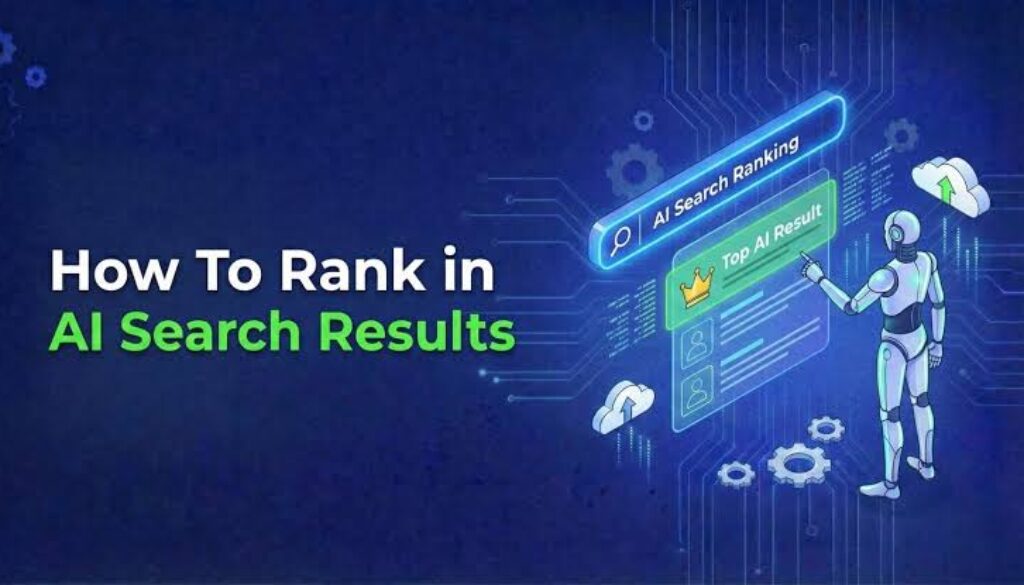
How to Rank in AI Search is becoming one of the most important questions for businesses, marketers, bloggers, and website owners in 2026. Search behavior is changing rapidly as users increasingly rely on AI-powered platforms like ChatGPT, Google Gemini, Perplexity AI, and Microsoft Copilot to find answers instead of using traditional search engines alone.
Unlike conventional search, AI search engines don’t simply display a list of websites. They analyze information from trusted sources, understand user intent, and generate complete answers. As a result, businesses must adapt their content strategy to remain visible in this new era of search.
Learning How to Rank in AI Search helps your website gain visibility not only on Google but also across AI assistants that millions of people use every day. In this guide, you’ll discover practical strategies to improve your chances of appearing in AI-generated responses while strengthening your overall SEO performance.
Before learning how to rank in AI-powered search engines, it’s important to understand the fundamentals of digital marketing. Read our guide on What is Digital Marketing? to build a strong foundation.
What Is AI Search?
AI Search refers to search experiences powered by artificial intelligence that generate direct answers instead of showing only a list of web pages.
Popular AI search platforms include:
- ChatGPT
- Google Gemini
- Perplexity AI
- Microsoft Copilot
- Google AI Overviews
These systems understand natural language, analyze multiple sources, and provide conversational answers based on trusted information.
Unlike traditional search engines, AI search focuses more on answering questions than simply ranking pages.
Why AI Search Matters in 2026
AI search is changing how users consume information.
Instead of searching:
“Best SEO tips”
People now ask:
“How can I improve my website rankings in 2026?”
AI assistants respond with complete explanations instead of requiring users to visit several websites.
This shift means businesses must optimize content differently.
Understanding How to Rank in AI Search gives you an advantage before AI search becomes the primary way people discover information.
Search technology is evolving rapidly. Explore our article on SEO Trends in 2026 to understand the latest changes shaping the future of search.
Traditional SEO vs AI Search
| Traditional SEO | AI Search |
|---|---|
| Focuses on Google rankings | Focuses on AI-generated answers |
| Click-based traffic | Answer-based visibility |
| Keyword optimization | Context optimization |
| Search results pages | Conversational responses |
| Organic rankings | AI citations and mentions |
How AI Search Engines Choose Content
Many people believe AI search randomly selects websites.
In reality, AI platforms evaluate multiple quality signals before using content in generated responses.
These include:
- Relevance
- Accuracy
- Expertise
- Authority
- Trustworthiness
- Content freshness
- User experience
Content that consistently demonstrates these qualities has a greater chance of appearing in AI-generated answers.
Why Google Rankings Alone Are No Longer Enough
Ranking on Google’s first page is still valuable, but visibility in AI-generated answers provides an additional opportunity to reach users.
Someone asking ChatGPT or Gemini a question may never open Google.
If your website is referenced inside AI-generated responses, your brand gains:
- Increased authority
- Better visibility
- More trust
- Additional referral traffic
- Greater brand recognition
Modern content strategies should therefore target both traditional search engines and AI search platforms.
Key Factors That Help You Rank in AI Search
1. Create Helpful Content
One of the strongest factors influencing How to Rank in AI Search is creating genuinely helpful content.
Instead of writing for search engines, write for people.
Ask yourself:
- Does this article answer the user’s question?
- Is the explanation clear?
- Would someone find this useful?
Helpful content consistently performs better in both Google Search and AI search engines.
2. Demonstrate Experience
AI systems increasingly prioritize content created by people with real-world experience.
For example, instead of saying:
“SEO is important.”
Explain:
- how you’ve implemented SEO,
- what results you’ve observed,
- or provide practical examples.
Original insights make your content more valuable than generic AI-generated text.
3. Build Topical Authority
Publishing one article about SEO isn’t enough.
AI prefers websites that demonstrate expertise across an entire subject.
Example SEO Cluster:
- What Is SEO?
- Keyword Research Guide
- Technical SEO Guide
- On-Page SEO Checklist
- Local SEO
- SEO Trends
- Google Ranking Factors
- SEO vs AEO vs GEO
- How to Rank in AI Search
This structure helps AI understand that your website specializes in SEO.
4. Match User Intent
Understanding search intent is critical.
When someone searches:
“How to Rank in AI Search”
they expect:
- practical strategies,
- step-by-step guidance,
- examples,
- actionable tips.
Avoid creating content that only defines the topic.
Instead, solve the user’s problem.
Optimize for Questions
AI platforms love question-based content.
Use headings like:
What Is AI Search?
Why Is AI Search Important?
How Does ChatGPT Choose Information?
Can My Website Appear in AI Answers?
These headings closely match natural language searches.
Write Clear Answers First
After every heading, answer the question immediately.
Example:
What Is AI Search?
AI Search uses artificial intelligence to understand user intent and generate direct answers instead of showing only traditional search results.
Then continue with a more detailed explanation.
This structure improves your chances of appearing in:
- AI Overviews
- Featured Snippets
- Voice Search
- ChatGPT responses
Use Simple Language
Complex writing makes it harder for AI systems to extract useful information.
Instead:
- Write short sentences.
- Use active voice.
- Explain technical terms.
- Keep paragraphs concise.
Simple writing improves readability for both users and AI.
Organize Content Properly
Good content structure matters.
Use:
- One H1
- Logical H2 sections
- Supporting H3 headings
- Bullet lists
- Tables
- Numbered steps
Well-structured content is easier for AI systems to interpret.
Cover Topics Completely
Thin articles rarely become trusted references.
Instead of publishing multiple short posts, create comprehensive guides that answer every important question about a topic.
A complete guide on How to Rank in AI Search should include:
- AI search overview
- Ranking factors
- SEO best practices
- AEO optimization
- GEO optimization
- Content strategy
- Common mistakes
- FAQs
- Future trends
Comprehensive content has a better chance of becoming an authoritative source.
Focus on E-E-A-T
Google and AI search systems increasingly evaluate content using E-E-A-T principles.
E-E-A-T stands for:
- Experience
- Expertise
- Authoritativeness
- Trustworthiness
Improve E-E-A-T by:
- Publishing original content
- Showing author expertise
- Using reliable sources
- Updating content regularly
- Providing accurate information
Strong E-E-A-T signals increase trust among both users and AI platforms.
Build Strong Entity Authority
One of the biggest differences between traditional SEO and AI search is the importance of entities.
An entity is a clearly identifiable person, business, product, service, or location that AI systems can understand and connect across different sources.
For example, if your website consistently mentions your:
- Brand name
- Services
- Founder
- Business location
- Social profiles
AI systems become more confident that your business is legitimate.
Ways to improve entity authority
- Use the same business name everywhere online.
- Complete your Google Business Profile.
- Add Organization Schema.
- Build author profiles.
- Get mentioned on trusted websites.
- Maintain active social media profiles.
The stronger your entity signals, the better your chances of appearing in AI-generated answers.
Use Structured Data (Schema Markup)
Schema markup helps search engines and AI understand your content more accurately.
Although schema alone doesn’t guarantee AI visibility, it improves machine readability and supports rich search experiences.
Useful schema types include:
- Article Schema
- FAQ Schema
- Organization Schema
- Breadcrumb Schema
- Person Schema
- Local Business Schema
Schema makes it easier for AI systems to interpret relationships between topics.
Earn High-Quality Mentions
Backlinks still matter.
However, AI search also values brand mentions, expert references, and citations from authoritative sources.
Try to earn mentions through:
- Guest articles
- Industry publications
- Podcasts
- Interviews
- Research reports
- Digital PR
The more trustworthy websites discuss your brand, the stronger your authority becomes.
Improve Technical SEO
Technical SEO remains the foundation for AI visibility.
If AI crawlers cannot access or understand your pages, your content is less likely to be surfaced.
Focus on:
- Fast page speed
- Mobile-friendly design
- HTTPS
- XML Sitemap
- Clean URLs
- Proper canonical tags
- Crawlable HTML content
- Core Web Vitals
Google has emphasized that optimizing for generative AI experiences still relies on strong SEO fundamentals.
Google also recommends creating helpful, people-first content and maintaining strong technical SEO practices to improve visibility in both Search and AI-powered experiences. Learn more in the official Google Search Central documentation.
Keep Your Content Fresh
AI platforms prefer current and accurate information.
Update important pages regularly by adding:
- New statistics
- Recent examples
- Industry updates
- New screenshots
- Better explanations
Refreshing existing articles is often more effective than publishing many low-quality posts.
Create AI-Friendly Content Structure
AI models extract information section by section.
To improve your chances of being cited:
- Start each section with a direct answer.
- Keep paragraphs short.
- Use bullet points.
- Add comparison tables.
- Include numbered lists.
- Write descriptive headings.
- Answer one topic completely before moving to the next.
This structure makes your content easier for both readers and AI systems to understand.
Common Mistakes That Prevent AI Visibility
Many websites unknowingly reduce their chances of appearing in AI-generated answers.
Avoid these mistakes:
- ❌ Publishing generic AI-generated content without human editing
- ❌ Keyword stuffing
- ❌ Ignoring search intent
- ❌ Thin content
- ❌ No FAQ section
- ❌ Weak internal linking
- ❌ Outdated articles
- ❌ Poor page speed
- ❌ Missing author information
- ❌ No evidence or real examples
Instead, focus on creating original, trustworthy, and experience-based content that solves real user problems.
The Future of AI Search
AI search is still evolving, but one thing is already clear—businesses that adapt early will gain a significant competitive advantage.
Over the next few years, AI platforms will become even better at understanding:
- User intent
- Context
- Brand authority
- Expertise
- Original research
- First-hand experience
Instead of simply finding pages with the right keywords, AI systems will increasingly recommend content from websites that consistently publish trustworthy, well-structured, and helpful information. Google’s latest guidance also emphasizes that success in generative AI features is built on the same foundation as high-quality SEO: original, useful content and strong technical practices.
Businesses that invest in quality today will be better positioned for the future of search.
AI Search Optimization Checklist
Before publishing any article, ask yourself these questions.
✅ Does the page answer the user’s question immediately?
✅ Is the information original?
✅ Does the article demonstrate experience?
✅ Have you added internal links?
✅ Have you cited trustworthy sources when appropriate?
✅ Does the page have proper headings?
✅ Is the content mobile-friendly?
✅ Is Schema Markup implemented?
✅ Is the page fast?
✅ Is the content updated regularly?
If you answered “Yes” to most of these questions, your content is much more likely to perform well in both Google Search and AI-powered search experiences.
Frequently Asked Questions
1. What is AI Search?
AI Search uses artificial intelligence to understand user intent and generate direct answers instead of displaying only a list of web pages. Examples include ChatGPT, Google Gemini, Perplexity AI, Microsoft Copilot, and Google AI Overviews.
2. How do I rank in AI Search?
To improve How to Rank in AI Search, focus on creating helpful, original, well-structured content, build topical authority, demonstrate E-E-A-T, optimize technical SEO, and answer user questions clearly. These practices increase the likelihood of AI systems citing your content.
3. Is traditional SEO enough for AI Search?
No. Traditional SEO remains the foundation, but AI search also rewards clear answers, strong entity signals, structured content, and authoritative information. SEO, AEO, and GEO work best together.
4. Which AI search engines should I optimize for?
You should optimize for:
- ChatGPT
- Google Gemini
- Google AI Overviews
- Perplexity AI
- Microsoft Copilot
A strong AI search strategy generally benefits visibility across multiple platforms.
5. Does Schema Markup help AI Search?
Yes. While Schema Markup doesn’t guarantee AI citations, it helps search engines and AI systems better understand your content, making it easier to interpret and present in rich search experiences.
6. How important is E-E-A-T for AI Search?
E-E-A-T (Experience, Expertise, Authoritativeness, and Trustworthiness) is one of the strongest quality signals for both Google Search and AI-powered search. Content that demonstrates genuine expertise and credibility is more likely to be surfaced.
7. How often should I update AI Search content?
Review and update important articles every 3–6 months by:
- Adding recent examples
- Updating statistics
- Improving explanations
- Refreshing screenshots
- Expanding FAQs
Fresh content is more likely to remain relevant and useful.
8. Can small businesses rank in AI Search?
Yes. AI search favors relevance, clarity, expertise, and trust—not just brand size. A well-optimized small business website with high-quality content can compete successfully with larger websites.
Conclusion
Understanding How to Rank in AI Search is becoming essential for businesses, marketers, and content creators who want to stay visible in the future of digital marketing.
While traditional SEO remains the foundation, AI-powered platforms like ChatGPT, Google Gemini, Perplexity AI, and Microsoft Copilot are transforming how people discover information. Success now depends on combining SEO with Answer Engine Optimization (AEO) and Generative Engine Optimization (GEO).
To improve your AI visibility, focus on publishing original content, demonstrating real expertise, building topical authority, strengthening technical SEO, and structuring your pages so AI systems can easily understand and reference them.
As AI search continues to evolve, businesses that prioritize quality, trust, and user experience will be best positioned to earn both higher search rankings and AI citations. The future of search isn’t about replacing SEO—it’s about expanding it for the AI era.
Looking to improve your online visibility? Explore more SEO, AI search, and digital marketing guides on our blog to stay ahead of the latest trends.
Looking to grow your business online? Connect with the Best Digital Marketing strategist in Kannur and take your brand to the next level!